
Braking Test for ProX Carbon Rims
Braking Temperature Test for ProX Carbon Rim Brake Wheels
1. Purpose of Braking Temperature Test
Reliable braking performance is essential for rider safety and confidence, particularly when riding at high speeds or descending steep terrain. Effective braking allows riders to control speed before entering corners, while poor braking performance may reduce rider confidence and increase the risk of losing control. For rim brake carbon wheels, heat resistance is a critical performance factor. During prolonged braking, friction between the brake pads and the rim brake track generates significant heat. Excessive heat buildup may lead to rim deformation, structural damage, or reduced braking efficiency. The Braking Temperature Test is conducted to evaluate the rim’s ability to withstand extreme heat generated during continuous braking. During testing, the braking surface temperature can reach up to 245 °C, simulating demanding real-world riding conditions such as long downhill braking.
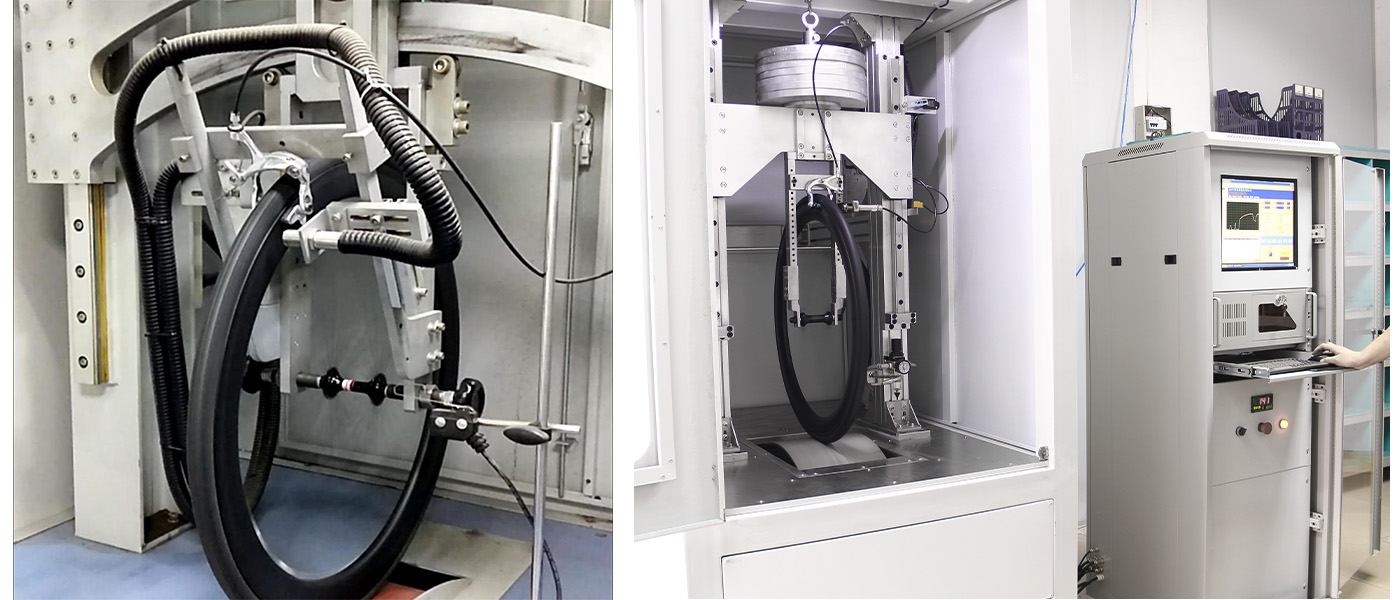
2. Test Procedure
The braking temperature test is performed using a controlled testing system that simulates real braking conditions while monitoring the rim’s structural stability. Test parameters include:
- Tire pressure: 120 psi
- Applied load: 100 kgf
- Braking force: 15 kg
- Test speed: 12.5 km/h
During the test:
- Braking is applied continuously for 80 seconds
- The brake is then released for 10 seconds
- This sequence is repeated 10 times to complete one cycle
Two full cycles are conducted to complete the test, resulting in a total braking duration of 1600 seconds. Throughout the test, the rim is monitored for heat resistance and structural stability under repeated braking conditions.
3. Test Standard
To pass the braking temperature test, the rim must satisfy the following criteria:
- The rim structure must remain unchanged compared with its original condition
- No visible damage is allowed on the braking surface or rim structure
- Maximum deformation must not exceed 0.3 mm
4. Test Result
After completing two full braking cycles, the test results showed:
- The rim structure remained intact with no visible damage
- Rim deformation remained ≤ 0.3mm
Braking Distance Test for ProX Carbon Rim Brake Wheels
1. Purpose of Braking Distance Test
In addition to heat resistance, braking performance is also evaluated through braking distance testing. A high-performance rim brake wheel should provide consistent braking power with short stopping distance, low noise, and reliable control under both dry and wet riding conditions. The braking distance test measures how effectively the brake track and brake pads work together to decelerate the wheel under controlled conditions.
2. Test Procedure
The test is performed using the following controlled parameters:
- Tire pressure: 120 psi
- Applied load: 100 kgf
- Brake lever force: 18 kg
- Initial speed: 25 km/h
For each test run:
- The braking system is applied continuously until the wheel comes to a complete stop
- This process is repeated 25 times to ensure reliable measurement of braking performance
The stopping distance for each run is recorded and averaged.
3. Test Standard
To meet the required braking performance standard:
- The maximum braking distance must not exceed 12 meters
This ensures that the braking system provides sufficient stopping power under the specified test conditions.
4. Test Result
Under the defined testing conditions:
- The average braking distance recorded was 10 meters
Conclusion: This result meets the test requirement and demonstrates that the rim brake system delivers strong braking performance with efficient stopping capability.


